
Defending Against Physical Abuse CPS Findings in WA
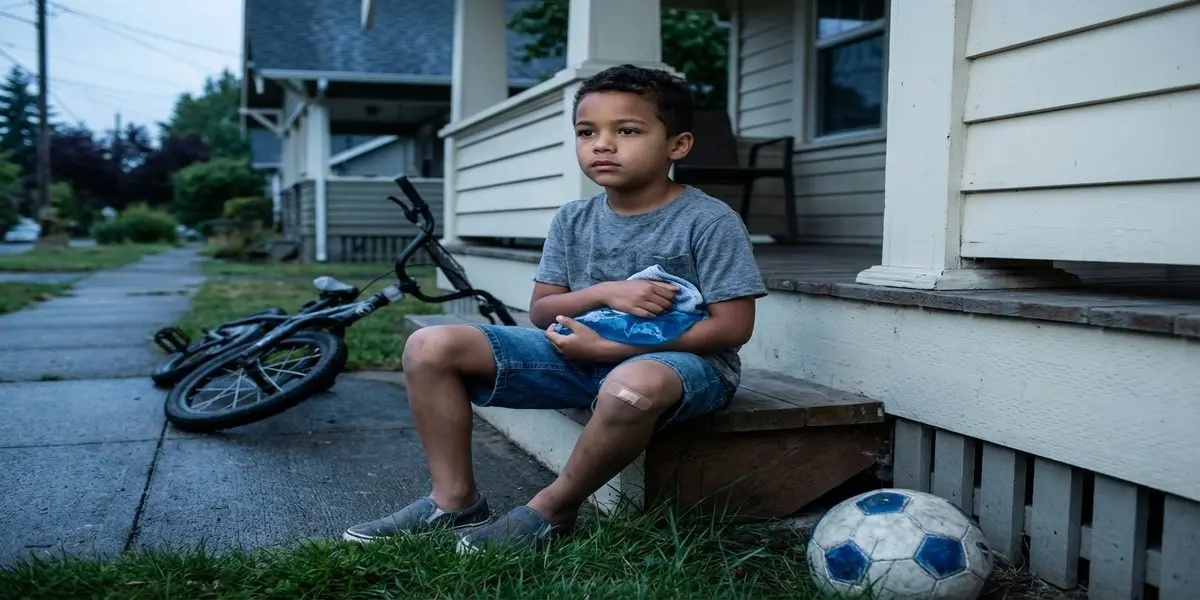
Your child fell off the monkey bars at recess. The school nurse saw a bruise on his ribcage. By 4:30 that afternoon, a caseworker from the Department of Children, Youth, and Families was standing in your living room asking your seven-year-old to lift his shirt.
That’s how fast physical abuse CPS Washington investigations begin. Not with evidence. Not with a thorough review. With a phone call from a mandatory reporter and a caseworker who has 24 hours to make initial contact on a high-priority referral.
I’ve defended families across Pierce County against CPS physical abuse allegations for years, and here’s the part that still frustrates me: the system is designed to investigate first and sort out the facts later. That design protects children who genuinely need protection. But it also sweeps up parents whose kids had playground accidents, medical conditions that mimic bruising, or discipline practices that are perfectly legal under Washington law.
If DCYF has contacted you about a physical abuse allegation, the next 30 days of decisions will shape your family’s future. This article walks you through exactly what Washington law says about physical abuse, how CPS investigations actually unfold, the defense strategies that work, and the appeal process that most parents don’t even know exists.
Torrone’s Takeaways
-
Physical abuse under Washington law requires “nonaccidental” injury. Accidental injuries from falls, sports, and normal childhood activity are not abuse, no matter how serious the bruise looks.
-
CPS must make initial contact within 24-72 hours of a referral depending on the risk level, and investigators are trained to look for patterns rather than isolated incidents.
-
RCW 9A.16.100 allows parents to use “reasonable and moderate” physical discipline for correction or restraint. But throwing, kicking, burning, cutting, or any act causing injury beyond “transient pain or minor temporary marks” is presumed unreasonable.
-
Medical conditions including osteogenesis imperfecta, von Willebrand disease, and congenital dermal melanocytosis (Mongolian spots) are routinely mistaken for inflicted injuries, especially in children of color.
-
You have exactly 30 days from receiving a founded finding letter to file an appeal with the Office of Administrative Hearings. Miss that window and the finding becomes permanent.
-
A founded finding on your record blocks employment in healthcare, education, childcare, and any field requiring a DCYF background check.
-
Getting an attorney before you give a recorded statement to CPS is the single most protective step you can take.
Table of Contents
- Torrone’s Takeaways
- What Washington Law Actually Calls Physical Abuse
- Corporal Punishment in Washington: What RCW 9A.16.100 Actually Permits
- How CPS Investigates Physical Abuse Allegations in the First 72 Hours
- Common Scenarios That Trigger Physical Abuse Investigations
- Medical Conditions That Mimic Abuse and Why They Matter in Pierce County
- False Allegations of Physical Abuse During Custody Disputes
- How Defense Medical Experts Reframe CPS Findings
- The 30-Day Appeal Window and OAH Hearing Process
- How a Founded Finding Affects Your Custody, Job, and Future
- Frequently Asked Questions
- About the Author
- Sources
What Washington Law Actually Calls Physical Abuse
The entire CPS investigation process turns on one word that most parents never hear until it’s too late: nonaccidental.
Under RCW 26.44.020, abuse means “injury of a child by any person under circumstances which cause harm to the child’s health, welfare, or safety.” But what separates an abuse finding from a closed case is whether the injury was inflicted intentionally or happened by accident.
A four-year-old who falls face-first into the coffee table and shows up to preschool with a black eye has an accidental injury. A four-year-old whose parent struck them hard enough to leave the same black eye has a nonaccidental injury. Same bruise. Same location. Completely different legal outcomes.
This distinction matters enormously during a CPS investigation because investigators are trained to assess whether the explanation for an injury is consistent with the injury itself. They look at location, pattern, severity, and the child’s developmental stage. A spiral fracture in a three-month-old who can’t roll over yet tells a different story than the same fracture in a running, climbing five-year-old.
Here’s what I need you to understand: CPS investigators are not medical doctors. They’re social workers making judgment calls under pressure, often with incomplete information. When the explanation you give doesn’t match what they expect to see, they don’t always consider that their expectations might be wrong.
The “Negligent Treatment” Trap
Many parents don’t realize that physical abuse isn’t the only finding CPS can make. RCW 26.44.020 also defines “negligent treatment or maltreatment” as an act or failure to act that “evidences a serious disregard of consequences of such magnitude as to constitute a clear and present danger to a child’s health, welfare, or safety.”
So even when CPS can’t prove you hit your child, they can sometimes pivot to a negligent treatment finding if they believe you failed to supervise adequately or created conditions where injury was foreseeable. I’ve seen this happen with parents whose children were injured during rough play with siblings when the parent was in another room. The injury was accidental, but CPS argued the lack of supervision constituted negligence.
Corporal Punishment in Washington: What RCW 9A.16.100 Actually Permits
Let me be direct about something that generates enormous confusion in my practice: spanking your child is not illegal in Washington state.
RCW 9A.16.100 states that “the physical discipline of a child is not unlawful when it is reasonable and moderate and is inflicted by a parent or guardian for purposes of restraining or correcting the child.”
That’s the law. But here’s the gap between the statute and how CPS applies it: the same law also lists specific actions that are presumed unreasonable. These include throwing, kicking, burning, or cutting a child, and critically, “doing any other act that is likely to cause bodily harm to a child greater than transient pain or minor temporary marks.”
Transient pain or minor temporary marks. That’s the line. And it’s intentionally vague.
A swat on the bottom that stings for a few minutes and leaves no mark? Likely legal. An open-handed slap that leaves a red handprint visible the next morning? CPS will almost certainly classify that as exceeding “transient pain or minor temporary marks.”
Cultural Discipline Practices and the Pierce County Reality
Pierce County is one of the most ethnically diverse counties in Washington. Tacoma, Lakewood, and the surrounding communities are home to large Pacific Islander, Asian, African American, Latino, and immigrant populations. Many of these families bring discipline traditions rooted in their cultural backgrounds, practices that were normal in the countries or communities where they grew up.
I’ll be honest about something uncomfortable: I’ve represented parents who genuinely believed they were disciplining their child appropriately because that’s how they were raised, how their parents were raised, and how their community operates. Their intent was correction, not cruelty. But Washington law doesn’t carve out cultural exceptions to RCW 9A.16.100. If the physical discipline leaves marks beyond “transient pain or minor temporary marks,” CPS can make a founded finding regardless of cultural context.
This isn’t an argument that cultural practices should override child safety. It’s an acknowledgment that many good parents in our community are caught off-guard by where Washington draws the line, and they need an attorney who understands the cultural context while navigating the legal standard.
Case illustration: A Samoan family in Lakewood used a traditional wooden spoon for discipline, the same way the grandmother and great-grandmother had. When the school noticed marks on the child’s thighs, CPS was called. The caseworker had no context for the family’s cultural practice. No one asked about their background or parenting philosophy. The investigation moved straight to a founded finding. We appealed, presented cultural context alongside evidence that the parents immediately changed their discipline approach after learning Washington’s standard, and the ALJ modified the finding. But that family spent four months with a founded finding on their record before we resolved it.
How CPS Investigates Physical Abuse Allegations in the First 72 Hours
Understanding the investigation timeline is critical because what happens in the first three days often determines the trajectory of the entire case.
Hour 0-24: The Referral and Risk Assessment
When a mandatory reporter (teacher, doctor, nurse, counselor) or any member of the public calls the DCYF child abuse hotline, an intake worker screens the call and assigns a response time based on the alleged risk level:
- Emergent (24 hours): Allegations of severe injury, sexual abuse, or immediate danger. A caseworker must make face-to-face contact with the child within 24 hours.
- Non-emergent (72 hours): Allegations of lesser physical injury, neglect, or concerns that don’t suggest immediate danger.
During this initial phase, the caseworker pulls whatever records DCYF has on your family. Prior referrals, prior investigations, even unfounded ones, are all visible to the investigator before they knock on your door.
Hour 24-72: The Initial Contact
The caseworker arrives, usually unannounced. They want to see the child, examine the injury, interview the child separately from the parents, interview each parent, and assess the home environment. They take photographs of injuries. They may ask the child to undress partially to check for additional marks.
Here’s the damaging admission I need to make: too many of my clients have already given detailed statements to CPS before they ever call me. By the time I’m involved, there’s a recorded statement on file that I can’t un-ring. Parents talk because they’re innocent and they think explaining will make this go away. Sometimes it does. But when it doesn’t, every word they said becomes evidence in the founded finding.
If CPS contacts you, you have the right to have an attorney present during any interview. Exercise that right.
After 72 Hours: The Investigation Period
CPS has approximately 45-60 days to complete their investigation. During this time, they may interview teachers, doctors, neighbors, and extended family. They may request medical records. They may ask for a follow-up interview with you or your child.
At the end of the investigation, DCYF makes one of two determinations: founded (sufficient evidence that abuse or neglect likely occurred) or unfounded (insufficient evidence).
Common Scenarios That Trigger Physical Abuse Investigations
Not every CPS referral involves actual abuse. In my practice, I see certain patterns repeat across Pierce County families.
Playground and Sports Injuries
Children get hurt. They fall off slides, collide during soccer practice, tumble off bikes, and crash into each other on the school playground. When a child shows up to school Monday morning with a dramatic bruise and tells the teacher “I fell,” some teachers report it because they’re mandated reporters and they’d rather report unnecessarily than miss genuine abuse. That’s the system working as designed. But it means parents with active, athletic children face a higher baseline risk of investigation.
Sibling Injuries
Brothers and sisters hit each other. A five-year-old pushes his three-year-old sister down the stairs. The three-year-old goes to the ER with a bump on her head. The ER doctor asks how it happened. The mother explains. But the doctor is a mandatory reporter, and the injury is to a toddler’s head, so a report goes to CPS. Now the parents are being investigated not because they hit their child but because their children hit each other.
Discipline That Crossed the Line
I represent parents who spanked their child in a moment of frustration and left marks they didn’t intend to leave. These aren’t monsters. They’re overwhelmed parents who lost their temper, used more force than they meant to, and are now terrified. The legal question isn’t whether they’re good parents. It’s whether the physical discipline exceeded what RCW 9A.16.100 allows.
Case illustration: Consider a parent who gives a child an open-handed swat on the rear after the child repeatedly runs into the street, and a small bruise appears the next day that a school nurse documents. CPS may investigate and initially move toward a founded finding. A statement from the child’s pediatrician confirming the child bruises easily, evidence of the parent’s clean history, and proof that the discipline was a one-time response to a genuine safety concern can all support an unfounded result, because the legal question is whether the force exceeded what RCW 9A.16.100 allows, not simply whether a mark appeared.
Medical Conditions That Mimic Abuse and Why They Matter in Pierce County
This is the section of the article that keeps me up at night, because I’ve watched families nearly destroyed by medical conditions that CPS investigators didn’t know existed.
Osteogenesis Imperfecta (Brittle Bone Disease)
Osteogenesis imperfecta (OI) is a genetic condition that causes bones to break with little or no apparent cause. A child with undiagnosed OI can sustain fractures from normal handling, diaper changes, or being picked up. When those fractures show up on X-rays, they look identical to fractures caused by shaking or twisting, the exact injury patterns CPS is trained to flag as abuse.
According to research published in the American Journal of Roentgenology, medical conditions that mimic abuse were identified in nearly 5% of children evaluated for suspected physical abuse in a large multi-institutional study. Five percent sounds small until you realize that’s thousands of families nationally who faced abuse investigations for medical conditions.
Bleeding Disorders: Von Willebrand Disease, Hemophilia, and Thrombocytopenia
The American Academy of Pediatrics has published extensive guidance on evaluating children with unexplained bruising for underlying bleeding disorders before concluding abuse. Von Willebrand disease alone affects up to 1% of the population and causes bruising from minimal contact that can look dramatic, unexplained, and suspicious to an untrained eye.
Hemophilia, platelet disorders, and even vitamin K deficiency in infants can produce bruising patterns that CPS investigators interpret as inflicted injury. When these conditions are undiagnosed, the parent has no explanation for why their child bruises so easily, and “I don’t know why they have bruises” is the worst possible answer to give a CPS investigator.
Congenital Dermal Melanocytosis (Mongolian Spots)
Congenital dermal melanocytosis, historically called Mongolian spots, are flat blue-gray skin markings present at birth or appearing in the first weeks of life. They occur in 50-90% of Asian, African, and Hispanic infants but less than 10% of Caucasian infants.
These markings look exactly like bruises to anyone unfamiliar with them. Exactly. They’re blue-gray, they appear on the lower back, buttocks, and sometimes limbs, and they don’t hurt the child at all. But a daycare worker or teacher who has never seen dermal melanocytosis will call CPS reporting what they believe are bruises on a toddler’s back and legs.
This is particularly relevant in Pierce County. Tacoma and Lakewood have significant Pacific Islander, East African, and Southeast Asian communities. Children in these families are more likely to have dermal melanocytosis and more likely to encounter mandatory reporters unfamiliar with the condition.
Case illustration: Consider a family who brings an infant to a new pediatrician after moving to the area. The pediatrician, who has not seen the baby before, observes blue-gray marks on the infant’s lower back and buttocks and files a CPS report. When a prior pediatrician had already documented the marks as dermal melanocytosis at birth, obtaining those records and connecting CPS with a dermatologist who confirms the diagnosis can close the case. Even then, a family may endure weeks of investigation, a home visit, and real fear before the facts catch up.
False Allegations of Physical Abuse During Custody Disputes
I need to address something that happens more often than the system wants to admit: CPS reports filed not because a child is in danger but because one parent wants leverage over the other in a custody battle.
Research published in the journal Child Abuse & Neglect found that false allegations of abuse and neglect increase substantially during parental separation, particularly in contested custody proceedings. Data from the Center for Prosecutor Integrity suggests that over 20 million Americans have been falsely accused of abuse at some point, though that figure includes all types of abuse allegations and all contexts.
What I see in my practice is more specific: a parent facing an unfavorable custody outcome makes a CPS referral alleging physical abuse, often timed to coincide with a court hearing or mediation session. The allegations are designed to create an investigation that disrupts the other parent’s custody time and creates a paper trail the accusing parent can reference in family court.
The system isn’t built to quickly distinguish between genuine safety concerns and tactical allegations. CPS must investigate every referral that meets intake screening criteria. They can’t look at a report and say “this is probably just a custody dispute” and close it. Every report gets investigated on its merits.
This is where having an attorney who practices both family law and criminal defense makes a material difference. At Melvin & Torrone, we see both sides of these cases. We represent parents accused of abuse in the CPS investigation while simultaneously handling their custody case in family court. That dual perspective lets us identify when a CPS referral is being weaponized and respond strategically across both proceedings.
How Defense Medical Experts Reframe CPS Findings
When CPS concludes that an injury is “nonaccidental,” they’re relying on the observations and opinions of the medical professionals who examined the child, usually an ER doctor or a child abuse pediatrician at a hospital-based child advocacy center.
These medical opinions carry enormous weight. But they’re not infallible.
Defense medical experts, typically board-certified pediatricians, biomechanical engineers, or forensic pathologists, can reframe CPS findings by providing alternative explanations for injuries that are consistent with the evidence. This isn’t about manufacturing doubt. It’s about ensuring that a complete medical picture is considered before a parent’s life is permanently altered.
A defense medical expert might:
- Identify an undiagnosed medical condition such as osteogenesis imperfecta, a bleeding disorder, or a connective tissue disorder that explains the injury pattern.
- Evaluate biomechanical plausibility of the parent’s explanation. If a parent says the child fell from a kitchen chair and the child has a specific type of skull fracture, a biomechanical expert can testify whether that fall mechanism could produce that fracture.
- Challenge the methodology of the initial medical assessment. Child abuse pediatrics is a subspecialty with its own diagnostic frameworks, and those frameworks have been challenged in peer-reviewed literature for sometimes lacking the specificity needed to distinguish abuse from accident.
- Provide context about injury patterns in children at specific developmental stages. A bruise on the shin of a walking toddler has a very different significance than the same bruise on a non-mobile infant.
The cost of retaining a defense medical expert ranges from $3,000 to $10,000 or more depending on the complexity of the case. That’s a significant expense. But when the alternative is a founded finding that follows you permanently, it’s an investment that often determines the outcome.
The 30-Day Appeal Window and OAH Hearing Process
If DCYF issues a founded finding against you, they’ll send a letter explaining the finding and your right to appeal. That letter starts a clock. You have 30 days to request a hearing with the Office of Administrative Hearings (OAH).
Thirty days. Not thirty business days. Thirty calendar days. If you miss that deadline, the founded finding becomes permanent on your record with no further opportunity to contest it.
Step 1: Internal Review
Before the OAH hearing, you may request an internal review by DCYF. This is a review by someone within the agency who was not involved in the original investigation. Some parents skip this step and go directly to OAH. Both options are available.
Step 2: The OAH Hearing
The OAH hearing is a formal administrative proceeding conducted by an Administrative Law Judge (ALJ). It follows the Washington Administrative Procedure Act (RCW 34.05) and operates under WAC 110-03.
Key points about the hearing:
- The burden of proof is on DCYF. They must prove the founded finding is supported by a preponderance of the evidence. You don’t have to prove your innocence.
- You can present witnesses, documents, medical records, and expert testimony.
- You can cross-examine DCYF’s witnesses, including the caseworker who investigated your case.
- You can be represented by an attorney. You should be.
The ALJ will issue a written decision. If they find that DCYF’s evidence is insufficient, they will order the founded finding overturned and removed from your record. If the ALJ upholds the finding, you can seek judicial review in Superior Court.
What Happens at the Hearing
The hearing is not a criminal trial, but it’s more formal than most parents expect. DCYF presents their case first. They’ll call the caseworker who investigated, possibly a supervisor, and any medical professionals who examined your child. They’ll introduce photographs, medical records, interview transcripts, and the child’s statements.
Then it’s your turn. This is where your attorney presents alternative evidence: medical expert testimony, character witnesses, documentation of accidental injuries, evidence of a custody dispute motivating the allegation, or anything else that undermines DCYF’s finding.
I’ve taken dozens of these cases to OAH. The hearings are winnable, particularly when CPS relied on incomplete medical information, failed to consider alternative explanations, or investigated a referral that was clearly motivated by a custody dispute.
How a Founded Finding Affects Your Custody, Job, and Future
A founded finding isn’t a criminal conviction. No one goes to jail for a CPS founded finding alone. But the collateral damage can be devastating in ways that criminal charges sometimes aren’t.
Employment Consequences
A founded finding appears on DCYF background checks, which are required for employment in:
- Childcare and early learning (daycares, preschools, after-school programs)
- Education (teachers, paraprofessionals, bus drivers, school staff)
- Healthcare (nursing, home health aides, assisted living)
- Foster care and adoption (you cannot become a foster parent or adopt)
- State and government positions working with vulnerable populations
If you’re a teacher, nurse, daycare worker, or anyone who works with children or vulnerable adults, a founded finding can end your career. Not suspend it. End it.
After at least five years, you may be eligible for a Certificate of Parental Improvement (CPI) from DCYF. A CPI doesn’t erase the founded finding. It doesn’t remove it from your record. It removes the automatic employment bar so that employers can see the finding but are no longer prohibited from hiring you. It’s better than nothing, but it’s not a clean slate.
Custody Consequences
In family court, a founded CPS finding is admissible evidence. A judge evaluating custody under Washington’s “best interests of the child” standard will consider a founded finding as a factor, though not necessarily a dispositive one. If you’re in a contested custody case and you have a founded finding for physical abuse while the other parent does not, you are at a significant disadvantage.
Professional Licensing
Founded findings can affect professional licenses regulated by Washington state agencies. Nursing licenses, teaching certificates, social work licenses, and counseling certifications all require background checks that will reveal a founded finding.
The Long Shadow
Founded findings in Washington remain on your record for varying periods depending on the type of finding, and some can remain indefinitely. This isn’t a speeding ticket that drops off after a few years. It’s a permanent mark that requires active effort to address through the CPI process or successful appeal.
How Melvin & Torrone Defends Against CPS Physical Abuse Findings
Our firm handles CPS defense differently because we’re built differently. As a combined family law and criminal defense practice, we understand that a CPS physical abuse allegation rarely exists in isolation. It overlaps with custody proceedings, criminal investigations, and sometimes protection order cases.
When a client comes to us with a physical abuse allegation from CPS, we:
- Review the referral and investigation notes to identify weaknesses in CPS’s evidence and determine whether the referral was motivated by a custody dispute.
- Connect you with defense medical experts when the injury has alternative medical explanations.
- Prepare you for interviews so you know what to say, what not to say, and how to exercise your rights without appearing uncooperative.
- Coordinate across family court and CPS proceedings to ensure that your defense strategy is consistent and that one proceeding doesn’t undermine the other.
- Handle the OAH appeal if a founded finding is issued, presenting the strongest possible case to the Administrative Law Judge.
We practice in Pierce County Superior Court, Tacoma Municipal Court, and every court across the South Puget Sound service area. We know the caseworkers, we know the judges, and we know how these cases move through the system in our community.
If CPS has contacted you about a physical abuse allegation, talk to an attorney today. The earlier we’re involved, the more we can protect.
Frequently Asked Questions
Can CPS take my child based on a single bruise?
A single bruise alone is unlikely to result in removal, but it depends on the child’s age, the bruise’s location, and whether CPS considers the injury consistent with the explanation provided. Bruises in unusual locations on pre-mobile infants are treated much more seriously than bruises on the shins of a running toddler. CPS can request an emergency removal through the court if they believe the child is in imminent danger, but a single bruise without other concerning factors usually results in an investigation rather than immediate removal.
What’s the difference between a founded and unfounded CPS finding?
A founded finding means DCYF determined that a preponderance of the evidence supports the conclusion that abuse or neglect likely occurred. An unfounded finding means they did not find sufficient evidence. Founded findings go on your record and appear in DCYF background checks. Unfounded findings do not create a permanent record that affects employment or custody, though the investigation itself may still appear in DCYF’s internal records.
Do I have to let CPS into my house?
You are not legally required to allow CPS into your home without a court order. However, refusing entry can escalate the situation. CPS may seek a court order to enter your home or to examine your child, and your refusal can be cited as a factor in their investigation. This is a situation where having an attorney advise you in real time makes a significant difference, because the right approach depends on the specific circumstances of your case.
Can I be criminally charged for the same incident CPS is investigating?
Yes. CPS investigations and criminal investigations are separate proceedings that can run simultaneously. RCW 26.44.050 requires CPS to notify law enforcement when a report indicates serious physical abuse. Anything you tell a CPS caseworker can be shared with prosecutors. This is one of the most important reasons to have an attorney present before giving any statement to CPS.
How long does a CPS investigation for physical abuse take?
DCYF aims to complete investigations within 45-60 days, though complex cases can take longer. During this period, the caseworker will interview family members, the child, teachers, medical providers, and anyone else who may have relevant information. You will receive a written determination letter once the investigation concludes.
Will a CPS investigation show up on a background check?
Unfounded investigations generally do not appear on standard background checks. Founded findings, however, appear on DCYF background checks required for employment in childcare, education, healthcare, and state positions involving vulnerable populations. They do not appear on standard criminal background checks because they are administrative findings, not criminal convictions.
Can a doctor’s report alone be enough for CPS to make a founded finding?
Yes. A medical professional’s opinion that an injury is “nonaccidental” carries significant weight in CPS investigations and can be sufficient to support a founded finding. This is precisely why defense medical experts are so important. If the original examining physician concluded abuse but didn’t test for bleeding disorders, didn’t consider the child’s developmental stage, or didn’t evaluate biomechanical plausibility of the reported accident, an independent medical expert can challenge those conclusions.
What happens if I miss the 30-day appeal deadline?
If you miss the 30-day window to request an OAH hearing, the founded finding becomes final. There is no extension, no late filing, and no do-over. The finding remains on your record permanently unless you qualify for a Certificate of Parental Improvement after at least five years. This is why contacting an attorney immediately after receiving a founded finding letter is essential.
About the Author
Chris Torrone, J.D. is a founding partner at Melvin & Torrone, PLLP in Tacoma, Washington. He built Torrone Law into Tacoma’s busiest family law practice before merging with Robert Melvin’s criminal defense firm to create a dual-practice model that serves families across Pierce County. Chris represents parents in CPS investigations, dependency proceedings, and administrative hearings throughout the South Puget Sound, including Tacoma, Lakewood, Puyallup, University Place, Gig Harbor, Spanaway, and Fife.
Each case is unique. Past results do not guarantee future outcomes. This article provides legal information, not legal advice. Reading this article does not create an attorney-client relationship with Melvin & Torrone, PLLP.
Sources
- RCW 26.44.020 — Definitions (Abuse of Children)
- RCW 9A.16.100 — Use of Force on Children
- RCW 26.44.050 — Duty of Law Enforcement or DCYF
- DCYF Child Protective Services Investigations
- DCYF Founded Findings and Background Checks
- DCYF Certificate of Parental Improvement
- Office of Administrative Hearings — DCYF Hearings
- OAH — What to Expect at Your DCYF Hearing
- American Academy of Pediatrics — Evaluating for Suspected Child Abuse: Conditions That Predispose to Bleeding
- Medical Mimics of Child Abuse — American Journal of Roentgenology
- Congenital Dermal Melanocytosis Misdiagnosis — JSM Central
- False Allegations of Abuse During Parental Separation — Child Abuse & Neglect
- Parents Defense Counsel — Founded vs. Unfounded Findings

Chris Torrone
Founding Partner, Melvin & Torrone PLLP
Chris Torrone is a dedicated advocate for clients facing family crises and criminal charges. With 20 years of experience practicing in Pierce County courts, Chris has built a reputation for meticulous case preparation and creative problem-solving in high-stakes litigation.