
Personal Injury
Personal Injury Lawyers in Tacoma, WA
When someone else's negligence leaves you injured, in pain, and facing mounting medical bills, you need experienced personal injury attorneys who will fight to get you every dollar you deserve.
Melvin & Torrone, PLLP represents injury victims throughout Tacoma and Pierce County in all types of personal injury claims — from car accidents to medical malpractice to wrongful death. Our personal injury lawyers have recovered millions of dollars for Washington State clients, and we don't get paid unless you win.
We know insurance companies use every tactic to minimize payouts. We level the playing field.
Free Case Review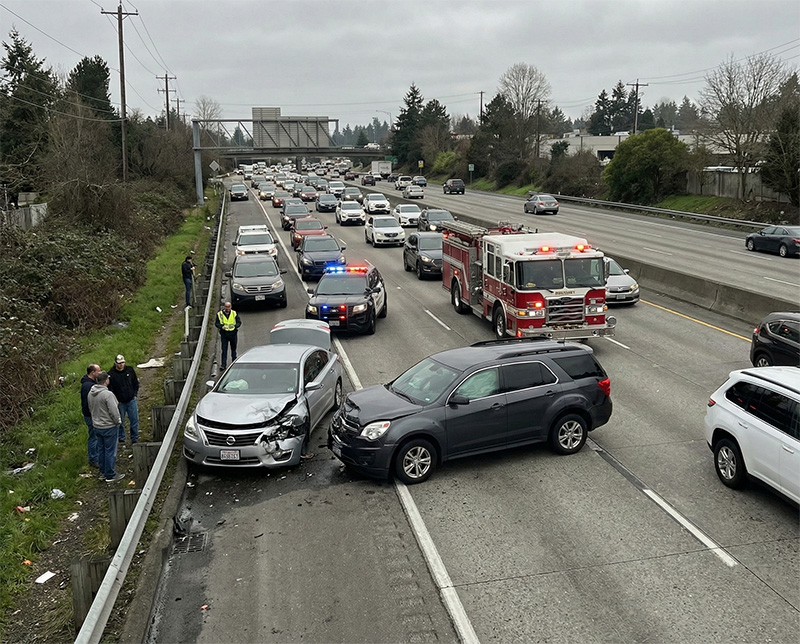
Why Choose Melvin & Torrone for Personal Injury?
Insurance companies have teams of adjusters trained to minimize payouts, staff attorneys and law firms on retainer, unlimited resources to fight claims, and decades of experience denying and devaluing claims.
You need an attorney who knows how to fight for the full value of your claim.
Studies show injured people with attorneys recover 3.5x more than those without attorneys, even after attorney fees.
Get Your Free ConsultationFull Damage Calculation
We calculate the true cost of your injury: medical expenses, future treatment, lost wages, lost earning capacity, pain and suffering, and emotional distress.
Insurance Company Experience
We know the tactics insurance companies use to undervalue claims. We counter with documentation, expert evidence, and a willingness to go to trial.
Trial-Ready Representation
Most personal injury cases settle, but the best settlements come when the insurance company knows your attorney will take the case to trial if necessary.
Local Court Knowledge
We litigate personal injury cases in Pierce County Superior Court. We know the judges, the local procedures, and how juries in this community evaluate injury claims.
Contingency Fee
No upfront costs, no hourly fees. We get paid only if you recover compensation. We advance all costs including expert witnesses, medical records, and court filing fees.
Our Personal Injury Practice Areas
Our attorneys represent injury victims across a full range of negligence and liability cases in Pierce County and throughout Western Washington.
Motor Vehicle Accidents +
Motor vehicle accidents are the leading cause of personal injury claims in Pierce County. Whether it's a fender-bender on I-5 or a catastrophic collision on State Route 16, our car accident attorneys fight to hold negligent drivers and their insurers accountable.
Car Accidents
- Rear-end collisions (most common; caused by tailgating, distracted driving, sudden stops)
- Head-on collisions (devastating injuries; wrong-way drivers, crossing centerline, impaired driving)
- T-bone / side-impact crashes (intersection accidents; failure to yield, red light running)
- Multi-vehicle pileups (complex liability; multiple at-fault parties)
- Single-vehicle crashes (rollover, hitting fixed objects; potential product liability or road defect claims)
- Parking lot accidents (backing collisions, pedestrian strikes)
Truck Accidents
Commercial truck crashes cause catastrophic injuries due to size and weight disparity:
- Semi-truck / 18-wheeler accidents
- Delivery truck accidents (Amazon, FedEx, UPS)
- Dump truck and construction vehicle accidents
- Tanker truck accidents (potential hazmat involvement)
- Flatbed and cargo accidents (falling loads, unsecured freight)
Federal regulations apply: FMCSA hours-of-service rules, maintenance requirements, driver qualifications, black box (ECM/EDR) data, logbook violations.
Multiple liable parties: Trucking company, driver, cargo loader, maintenance provider, truck manufacturer, leasing company.
Motorcycle Accidents
Motorcyclists suffer disproportionate injuries in crashes:
- Left-turn collisions (car turns left in front of oncoming motorcycle)
- Lane-splitting accidents (motorcycle traveling between lanes)
- Road hazard crashes (gravel, potholes, debris, uneven pavement)
- Dooring (car door opened into motorcycle's path)
- Rear-end collisions (motorcycle stopped at light)
- Bias against riders (insurance companies often blame motorcyclists unfairly; we fight stereotypes)
Pedestrian Accidents
- Crosswalk accidents (driver failure to yield)
- Parking lot pedestrian strikes
- Drunk driving pedestrian crashes
- Hit-and-run (we pursue uninsured motorist claims)
- Distracted driving (texting, phone use)
- Children struck by vehicles (school zones, residential areas)
Bicycle Accidents
- Dooring (car door opened into cyclist's path)
- Right-hook collisions (car turns right into cyclist)
- Left-cross collisions (car turns left across cyclist's path)
- Bike lane violations (cars illegally in bike lanes)
- Road hazards (potholes, debris, grates, railroad tracks)
Rideshare Accidents (Uber / Lyft)
Complex insurance coverage depending on driver status:
- Driver offline: Driver's personal insurance applies
- Driver online, waiting for ride: Lyft/Uber contingent liability ($50K/$100K/$25K)
- Driver en route or transporting passenger: Full Lyft/Uber commercial policy ($1M)
- Passenger injury claims
- Third-party injury claims (other drivers/pedestrians hit by rideshare vehicle)
Public Transportation & Hit-and-Run Accidents
- Pierce Transit bus accidents
- Sound Transit accidents (Tacoma Link light rail)
- School bus accidents
- Claims against government entities (special notice requirements, shorter deadlines, damage caps)
For hit-and-run accidents, we pursue uninsured motorist (UM) coverage from your own policy and work with police to identify suspects through surveillance video, witness statements, and vehicle debris analysis.
Common Accident Causes
Driver Negligence:
- Distracted driving (texting, phone calls, eating, GPS)
- Speeding and driving too fast for conditions
- Impaired driving (alcohol, drugs, prescription medications)
- Reckless driving, road rage, racing
- Drowsy driving and fatigue
- Failure to yield, red light and stop sign violations
- Improper lane changes, following too closely, wrong-way driving
Road Defects (Third-Party Liability):
- Potholes, uneven pavement, crumbling shoulders
- Missing or obscured signage, malfunctioning traffic signals
- Construction zone hazards (inadequate warning, barriers, signage)
- Claims against: Washington State DOT, Pierce County Roads, City of Tacoma Public Works
Vehicle Defects (Product Liability):
- Defective brakes, tires, steering, airbags
- Design defects, manufacturing defects, failure to warn
- Recalls (Takata airbags, unintended acceleration, tire blowouts)
Premises Liability (Slip and Fall, Trip and Fall & Dangerous Property) +
Property owners have a legal duty to maintain safe premises and warn visitors of hazards. When they fail, and someone gets hurt, they're liable.
Types of Premises Liability Cases
Slip and Fall Accidents:
- Wet floors (spills, leaks, mopping without warning signs)
- Ice and snow (failure to de-ice walkways, parking lots)
- Uneven flooring (torn carpet, transitions between surfaces)
- Polished or slippery surfaces (marble, tile, waxed floors)
Trip and Fall Accidents:
- Potholes in parking lots, cracked or uneven sidewalks
- Defective stairs (broken steps, missing handrails, inadequate lighting)
- Cluttered walkways (boxes, cords, debris)
- Raised thresholds, floor mats
Inadequate Security / Negligent Security:
- Assaults in parking lots (inadequate lighting, no security patrols)
- Robberies in apartment buildings (broken locks, no access control)
- Sexual assaults (inadequate lighting, landscaping providing hiding spots)
- Shootings at bars/clubs (no security, failure to remove violent patrons)
Other Premises Liability:
- Falling objects (store merchandise, construction site materials, ceiling fixtures)
- Broken elevators or escalators, collapsing balconies or decks
- Toxic mold exposure, lead paint exposure, carbon monoxide poisoning
- Swimming pool accidents (drowning, slip and fall, chemical exposure)
- Amusement park and recreation accidents (ride malfunctions, trampoline injuries)
Property Owner Duties
Property owners owe different duties depending on visitor status:
- Invitees (business visitors, customers): Highest duty — must inspect property for hazards, repair dangerous conditions, or warn visitors
- Licensees (social guests): Moderate duty — must warn of known hazards
- Trespassers: Limited duty — generally no duty except to not intentionally harm. Exception: attractive nuisance doctrine (swimming pools, trampolines attract children; must secure)
Proving Premises Liability
To win, we must prove the defendant owned or controlled property, was negligent (failed to maintain safe premises or warn of danger), the dangerous condition caused your injury, and you suffered actual harm.
Key evidence:
- Notice: Did owner know or should have known about hazard? ("Constructive notice": hazard existed long enough that reasonable inspection would've discovered it)
- Photos/video documenting the hazard, lighting, warning signs (or lack thereof)
- Incident reports, maintenance records, witness statements, surveillance footage
Washington Premises Liability Law
Open and Obvious Doctrine: If hazard is "open and obvious," property owner may not be liable. However, even obvious hazards can be actionable if owner should've anticipated harm despite obviousness, hazard is unavoidable (only means of access), or distraction prevented you from noticing.
Statute of Limitations: 3 years from date of injury.
Comparative Fault: Your damages reduced by your percentage of fault (e.g., you were texting while walking and didn't see wet floor sign).
Common Injuries from Slip/Trip and Fall
- Broken hips (especially in elderly)
- Wrist fractures (FOOSH injury — fall on outstretched hand)
- Ankle fractures and sprains, knee injuries (ACL tears, meniscus tears)
- Spinal injuries (vertebrae fractures, herniated discs)
- Traumatic brain injury (TBI) from head striking ground
- Shoulder injuries (rotator cuff tears, dislocations)
Medical Malpractice +
Doctors, nurses, and hospitals are not immune from accountability. When medical professionals breach the standard of care and cause injury, they must answer for it. Medical malpractice cases are complex, expensive to litigate, and require expert testimony — but when providers cause catastrophic harm, we fight for justice.
Types of Medical Malpractice
Surgical Errors:
- Wrong-site surgery (operating on wrong limb, organ, or patient)
- Retained surgical instruments (sponges, tools left inside patient)
- Nerve damage during surgery
- Anesthesia errors (overdose, failure to monitor, allergic reactions)
- Post-operative infections (negligent sterile technique)
- Unnecessary surgery
Misdiagnosis / Delayed Diagnosis:
- Failure to diagnose cancer (breast, lung, colon, prostate)
- Failure to diagnose heart attack or stroke (misdiagnosed as indigestion, anxiety)
- Failure to diagnose infections (meningitis, sepsis, appendicitis)
- Misdiagnosis leading to wrong treatment
Medication Errors:
- Wrong medication prescribed or wrong dosage
- Failure to account for drug interactions or allergies
- Pharmacy dispensing errors
Birth Injuries:
- Cerebral palsy (from oxygen deprivation during delivery)
- Erb's palsy / brachial plexus injury (shoulder dystocia, excessive pulling)
- Brain damage from delayed C-section
- Failure to monitor fetal distress
- Maternal injuries (hemorrhage, infections, tears)
Emergency Room Errors:
- Failure to triage properly (sending critical patient home)
- Failure to order appropriate tests
- Discharge too soon or failure to recognize life-threatening conditions
Nursing Home Abuse / Neglect:
- Bedsores / pressure ulcers (indicating neglect)
- Falls (inadequate supervision, unsafe environment)
- Dehydration and malnutrition, medication errors
- Physical, emotional, sexual abuse
- Wrongful death
Proving Medical Malpractice in Washington
Elements:
- Doctor-patient relationship (duty of care existed)
- Breach of standard of care (provider acted negligently)
- Causation (breach caused injury)
- Damages (patient suffered harm)
Standard of Care: What a reasonably prudent medical professional in the same specialty would do under similar circumstances. Requires expert witness testimony (we retain qualified physicians to review records and testify).
Certificate of Merit (RCW 7.70.150): Before filing malpractice lawsuit, attorney must file certificate stating case was reviewed by qualified expert who believes malpractice occurred.
Statute of Limitations (RCW 7.70.100):
- 3 years from date of injury OR
- 1 year from date you discovered (or should have discovered) injury
- Absolute bar: 8 years from date of act (with limited exceptions)
Damage Caps: Washington does not cap non-economic damages (pain and suffering) in medical malpractice cases.
Notice Requirements: If malpractice occurred at VA hospital, University of Washington Medical Center, or other government facility, special notice requirements apply (120 days).
Wrongful Death +
No amount of money can bring back someone you love. But when negligence takes a life, Washington law allows surviving family members to hold wrongdoers accountable and recover compensation for their devastating losses.
Causes of Wrongful Death
- Fatal car, truck, or motorcycle accidents
- Pedestrian and bicycle fatalities
- Medical malpractice (surgical errors, misdiagnosis, medication errors)
- Nursing home neglect or abuse
- Workplace accidents (construction, industrial, falls)
- Defective products
- Premises liability (inadequate security, building collapse)
- Assaults and homicides (negligent security)
- Drowning (pool accidents, boating accidents)
- Airplane, train, or bus crashes
Who Can File a Wrongful Death Claim? (RCW 4.20.020)
- Surviving spouse or state-registered domestic partner
- Children (biological, adopted, stepchildren in some cases)
- Parents (if deceased is child with no spouse/children)
- Siblings (if no spouse, children, or parents)
Estate representative may also file on behalf of beneficiaries.
Damages in Wrongful Death Cases
Economic Damages:
- Loss of financial support (income deceased would've earned over lifetime)
- Loss of benefits (health insurance, retirement, Social Security)
- Medical expenses (pre-death medical bills from injuries)
- Funeral and burial costs
Non-Economic Damages:
- Loss of love, companionship, and affection
- Loss of consortium (spousal relationship)
- Loss of guidance and nurture (for children losing parent)
- Loss of care, comfort, and protection
- Emotional suffering of survivors
Washington Wrongful Death Law
Statute of Limitations (RCW 4.16.080): 3 years from date of death (not date of negligent act — though often the same).
Survival Action vs. Wrongful Death Action: Wrongful death action compensates survivors for their losses. Survival action compensates estate for decedent's losses (pain and suffering before death, lost wages from injury to death). Both can be pursued simultaneously.
Criminal Case vs. Civil Case: If wrongful death involves crime (DUI homicide, assault, vehicular homicide), criminal prosecution is separate. We pursue civil claim for damages regardless of criminal outcome. Lower burden of proof in civil court: preponderance of evidence vs. beyond reasonable doubt.
Our Approach to Wrongful Death Cases
We treat grieving families with compassion while aggressively pursuing justice:
- Thorough investigation: Accident reconstruction, expert witnesses, subpoena records
- Identify all liable parties: Driver, employer, property owner, manufacturer, government entity
- Maximize compensation: Calculate full lifetime earnings, loss of household services, emotional losses
- Negotiate or litigate: We're prepared to take cases to trial if insurers won't pay fair value
Dog Bites & Animal Attacks +
Washington has one of the strictest dog bite laws in the nation — strict liability. Owners are liable for dog bites even if the dog never bit before and owner had no reason to know dog was dangerous.
Washington Dog Bite Law (RCW 16.08.040)
Strict Liability: Dog owner is liable for any bite, regardless of dog's prior behavior ("first bite" rule doesn't apply), owner's knowledge of viciousness, or whether owner was negligent.
Requirements:
- Bite occurred in public place or lawfully on private property
- Victim did not provoke dog
- Victim was not trespassing
Injuries from Dog Bites
- Lacerations and puncture wounds (deep tissue damage)
- Facial injuries (especially children; permanent scarring, disfigurement)
- Infections (staph, rabies, sepsis, tetanus)
- Nerve damage, broken bones (large dogs knocking down victims)
- Traumatic brain injury (from fall or dog attack)
- Psychological trauma (PTSD, fear of dogs, anxiety)
Children are most vulnerable: Lower height (bites to face, neck, head), less able to defend themselves, psychological impact more severe.
Defenses (Limited)
Owner may avoid liability if:
- Provocation: Victim provoked dog (hitting, teasing, tormenting)
- Trespassing: Victim was unlawfully on property
- Veterinary treatment: Dog bit during veterinary exam or grooming
Damages & Insurance Coverage
- Medical expenses (emergency room, surgery, reconstructive surgery, scar revision)
- Future medical costs (plastic surgery, scar treatments)
- Pain and suffering, disfigurement and scarring
- Psychological counseling (PTSD treatment)
- Lost wages (time off work for treatment)
Most dog bite claims paid by owner's homeowner's or renter's insurance (typically $100K–$500K coverage).
Breed exclusions: Some insurers exclude certain breeds (pit bulls, Rottweilers, German shepherds) — if excluded, we pursue owner's personal assets.
Statute of Limitations: 3 years from date of attack.
Product Liability +
When defective products injure consumers, manufacturers, distributors, and retailers are liable.
Types of Product Defects
- Design Defects: Product is inherently dangerous due to flawed design (affects entire product line)
- Manufacturing Defects: Error during production makes specific unit dangerous (isolated defect)
- Failure to Warn / Inadequate Instructions: Product lacks proper warnings about risks or instructions for safe use
Common Product Liability Cases
Defective Vehicles:
- Airbag failures (Takata recalls, non-deployment, improper deployment)
- Tire blowouts, brake failures, rollover propensity
- Unintended acceleration, seatbelt failures, fuel system fires
Dangerous Drugs & Medical Devices:
- Prescription drug side effects (failure to warn)
- Defective medical implants (hip replacements, knee replacements, hernia mesh, IVC filters, pacemakers)
- Dangerous supplements
Defective Consumer Products:
- Exploding batteries (phones, laptops, hoverboards, e-cigarettes)
- Defective appliances (fires, electrocution)
- Furniture tip-overs (dressers, TVs falling on children)
- Defective child products (cribs, strollers, car seats, toys)
Dangerous Machinery / Equipment:
- Industrial equipment lacking safety guards
- Power tools (saws, drills), agricultural equipment
Toxic Exposure:
- Asbestos (mesothelioma, lung cancer), lead paint, contaminated water
Proving Product Liability & Liable Parties
We must prove the product was defective, the defect existed when product left manufacturer, defect caused injury, and product was used as intended (or in reasonably foreseeable way). Expert testimony required (engineers, safety experts, medical experts).
Liable parties: Manufacturer, distributor/wholesaler, retailer (even if not at fault — strict liability), component part manufacturers.
Washington Product Liability Law (RCW 7.72):
- Statute of Limitations: 3 years from injury
- Statute of Repose: 12 years from first sale (with exceptions for fraud or latent defects)
Catastrophic Injuries +
Some injuries are so severe they permanently alter every aspect of life. Catastrophic injuries demand maximum compensation because victims face lifelong challenges.
Types of Catastrophic Injuries
Traumatic Brain Injury (TBI):
- Mild, moderate, severe TBI
- Cognitive impairment (memory, reasoning, concentration)
- Personality changes, emotional dysregulation, seizures
- Long-term care needs
Spinal Cord Injury (SCI):
- Complete vs. incomplete paralysis
- Paraplegia (lower body) or quadriplegia/tetraplegia (all four limbs)
- Loss of bowel/bladder control, respiratory dependence
- Lifetime medical costs exceeding millions
Amputation / Loss of Limb:
- Traumatic or surgical amputation
- Prosthetics (repeated replacements over lifetime)
- Physical therapy, occupational therapy, home and vehicle modifications
Severe Burns:
- Third and fourth-degree burns, skin grafts, reconstructive surgery
- Scarring, disfigurement, infection risk, psychological trauma
Other Catastrophic Injuries:
- Multiple fractures / polytrauma, blindness / vision loss
- Hearing loss / deafness, organ damage (kidney failure, liver damage, lung damage)
Calculating Damages for Catastrophic Injuries
Catastrophic injury cases require life care plans (expert testimony from life care planners, economists, vocational rehabilitation experts):
- Lifetime medical costs: Future surgeries, medications, assistive devices (wheelchairs, prosthetics, ventilators), in-home nursing care, physical and occupational therapy
- Home modifications: Wheelchair ramps, accessible bathrooms, widened doorways, elevator or stairlift
- Vehicle modifications: Hand controls, wheelchair-accessible vans
- Lost earning capacity: Total inability to work, reduced earning capacity, early retirement, lost benefits
- Pain and suffering: Physical pain, emotional distress, loss of enjoyment of life, loss of independence
- Loss of consortium: Spouse's claim for loss of companionship, intimacy
Verdicts and settlements in catastrophic injury cases often exceed $1 million, $5 million, even $10 million+ depending on severity and life expectancy.
Insurance Bad Faith +
You pay premiums for years expecting your insurer will be there when you need them. But insurance companies often deny valid claims, delay payment, or undervalue losses — breaching their duty of good faith. When insurers act in bad faith, they owe not just the policy benefits, but additional damages.
Types of Insurance Bad Faith
First-Party Bad Faith (your own insurance):
- UM/UIM claims denied or undervalued
- PIP / MedPay claims denied
- Homeowner's insurance claims denied (fire, water damage, theft)
- Disability insurance claims denied
- Health insurance denying necessary treatment
Third-Party Bad Faith (other driver's insurance):
- Unreasonably denying liability
- Failing to settle within policy limits (exposing their insured to excess judgment)
Bad Faith Conduct
- Denying claim without reasonable basis
- Failing to investigate claim properly
- Delaying claim processing unreasonably
- Lowball offers (offering far less than claim is worth)
- Misrepresenting policy terms (claiming exclusion applies when it doesn't)
- Forcing you to litigate obvious claims
- Failing to communicate (ignoring calls, failing to respond)
- Refusing to defend insured in lawsuit
Washington Insurance Fair Conduct Act (IFCA) – RCW 48.30.015
IFCA allows policyholders to sue insurers for unreasonable claims handling. If you win:
- Policy benefits owed
- Treble damages (triple the policy benefits, up to $30,000 or policy limits, whichever is less)
- Attorneys' fees and costs
Consumer Protection Act (CPA) – RCW 19.86
Insurer's bad faith may also violate CPA, allowing:
- Actual damages
- Treble damages (up to $25,000)
- Attorneys' fees
Injuries We Handle
Personal injury cases involve a wide range of injuries, from soft tissue damage to life-altering catastrophic conditions. We pursue full compensation for all of these.
Traumatic Brain Injury (TBI) +
- Concussion (mild TBI; symptoms: headaches, confusion, memory problems, sensitivity to light/noise)
- Moderate to severe TBI (loss of consciousness, cognitive impairment, personality changes)
- Closed head injury vs. penetrating head injury
- Long-term effects: chronic traumatic encephalopathy (CTE), post-concussion syndrome, seizures, emotional disturbances
Spinal Cord Injuries +
- Complete vs. incomplete spinal cord injury
- Paraplegia (lower body paralysis)
- Quadriplegia / Tetraplegia (all four limbs paralyzed)
- Herniated discs, bulging discs, ruptured discs
- Spinal fractures (vertebrae, compression fractures)
- Chronic pain, loss of sensation, loss of bowel/bladder control
Broken Bones, Soft Tissue & Internal Injuries +
Broken Bones / Fractures
- Compound fractures (bone breaks through skin)
- Comminuted fractures (bone shatters into pieces)
- Compression fractures (vertebrae)
- Fractures requiring surgery (plates, rods, screws, pins)
- Non-union or malunion (improper healing)
Soft Tissue Injuries
- Whiplash (cervical strain/sprain; neck hyperextension/flexion)
- Muscle strains and sprains
- Ligament tears (ACL, MCL, rotator cuff)
- Tendon damage
Internal Injuries
- Internal bleeding (abdominal hemorrhage, thoracic bleeding)
- Organ damage (liver laceration, spleen rupture, kidney injury, lung puncture)
- Pneumothorax (collapsed lung)
- Rib fractures
Facial Injuries, Burns, Amputation & Psychological Injuries +
Facial Injuries
- Broken nose, jaw, cheekbones, eye sockets
- Dental injuries (broken teeth, jaw misalignment)
- Lacerations and scarring
- Eye injuries (vision loss, detached retina)
Burn Injuries
- Post-crash fires, chemical burns, friction burns
- First, second, third, fourth-degree burns
- Permanent scarring, disfigurement
- Skin grafts, reconstructive surgery
Amputation
- Traumatic amputation (limb severed in crash)
- Medical amputation (limb so damaged it must be removed)
Psychological Injuries
- Post-Traumatic Stress Disorder (PTSD)
- Anxiety and depression
- Fear of driving (vehophobia)
Damages & Washington Personal Injury Law
Understanding the legal framework for personal injury claims in Washington helps you know what to expect and why timing matters.
Economic Damages (Quantifiable Financial Losses) +
Medical Expenses
Emergency room, hospitalization, surgery, ICU, imaging (X-rays, CT, MRI), diagnostic tests, prescriptions, physical therapy, occupational therapy, chiropractic care, pain management.
Future Medical Costs
Ongoing treatment, future surgeries, long-term care, assistive devices (wheelchairs, prosthetics), home modifications (wheelchair ramps, accessible bathrooms).
Lost Wages
Income lost during recovery (hourly wages, salary, self-employment income, bonuses, commissions).
Loss of Earning Capacity
Permanent reduction in ability to earn (career change, inability to return to previous work, reduced hours).
Property Damage
Vehicle repair or total loss, personal property in vehicle (laptops, phones, equipment).
Non-Economic Damages (Pain and Suffering) +
- Physical pain and suffering: Past and future pain, chronic pain, discomfort during recovery
- Emotional distress: Anxiety, depression, PTSD, loss of enjoyment of life
- Loss of consortium: Spouse's claim for loss of companionship, affection, sexual relations
- Disfigurement and scarring: Permanent scars, burns, amputations
- Disability and impairment: Permanent limitations on activities, mobility, independence
Washington does not cap non-economic damages in most personal injury cases (unlike some states). The full extent of your non-economic damages can be presented to a jury for determination.
Punitive Damages +
Washington allows punitive damages only when defendant acted with willful or wanton disregard for safety (extreme drunk driving, intentional crashes). Capped at greater of $250,000 or 3x compensatory damages.
Fault-Based System & Comparative Fault +
Fault-Based System: Washington is a fault state (not no-fault). Injured party must prove other driver was negligent to recover damages.
Comparative Fault (RCW 4.22.005): Washington uses pure comparative negligence. Your damages are reduced by your percentage of fault. Even if you're 99% at fault, you can still recover 1% of damages.
Example: $100,000 verdict; you're 30% at fault = you recover $70,000. Insurance companies routinely try to inflate your percentage of fault to reduce their payout, which is why having an attorney to challenge fault allocation is important.
Statute of Limitations & Deadlines +
Washington law imposes strict deadlines to file personal injury lawsuits:
- Personal Injury: 3 years from date of injury (RCW 4.16.080)
- Wrongful Death: 3 years from date of death
- Medical Malpractice: 3 years from injury or 1 year from discovery (8-year absolute bar)
- Claims Against Government: 120 days to file tort claim notice (before lawsuit)
Exceptions:
- Minors: Statute tolled until age 18 (then 3 years from 18th birthday)
- Against government entities: 120 days to file tort claim notice; then lawsuit within statute of limitations
Miss the deadline = case dismissed forever. No exceptions. Don't wait — evidence disappears, witnesses forget, and deadlines expire.
Insurance Requirements & Coverage +
Minimum Insurance Requirements (RCW 46.29.090)
Washington drivers must carry: $25,000 bodily injury per person, $50,000 bodily injury per accident, $10,000 property damage.
These limits are woefully inadequate — serious injuries easily exceed $25K. We pursue all available coverage:
- At-fault driver's liability policy
- Your underinsured motorist (UIM) coverage
- Your uninsured motorist (UM) coverage
- Umbrella policies
- Multiple liable parties (employer, vehicle owner, dram shop)
UM/UIM Coverage
Your own insurance pays when at-fault driver has no insurance or insufficient coverage. We strongly recommend purchasing maximum UM/UIM coverage available (up to $1M or more).
PIP & MedPay (Optional in WA)
Personal Injury Protection (PIP): Pays your medical bills and lost wages regardless of fault (up to policy limits, typically $10K–$35K). PIP is "first-party coverage" — you claim against your own policy immediately after accident.
Medical Payments Coverage (MedPay): Pays medical bills regardless of fault (typically $1K–$10K). Similar to PIP but more limited.
Insurance Company Tactics (What We Fight Against)
Insurance companies are for-profit businesses — they make money by denying or minimizing claims. Here's what they do and how we counter it.
Delay, Deny, Defend +
Delay
Dragging out investigation, slow-walking settlement negotiations, hoping you'll give up or accept lowball offer out of desperation.
Deny
Disputing liability ("our driver wasn't at fault"), disputing causation ("your injuries aren't from the accident"), disputing damages ("you didn't need that surgery").
Defend
Forcing you to file lawsuit and litigate for years, knowing most people can't afford to wait.
Specific Tactics Insurers Use +
- Recorded statements: Trying to get you to say something that hurts your claim (we don't let you give recorded statements without attorney review)
- Social media surveillance: Monitoring your Facebook, Instagram, TikTok for posts that contradict injury claims (we advise clients: no social media during claim)
- Independent Medical Exam (IME): Insurance company's doctor (biased) examines you to downplay injuries
- Lowball offers: Offering a few thousand dollars hoping you'll settle before consulting an attorney
- Blaming pre-existing conditions: Claiming your pain is from prior injuries, not the accident
- Disputing treatment: Claiming you're "overtreating," going to chiropractor too often, or getting unnecessary procedures
- Gaps in treatment: Using missed appointments or treatment gaps to argue you're not really hurt
We deal with insurance companies so you don't have to.
How Personal Injury Claims Work
Here is what to expect when you hire Melvin & Torrone to handle your personal injury case, from accident to settlement (or trial).
Step 1: Seek Medical Treatment Immediately +
Your health comes first. Seek treatment even if injuries seem minor (some injuries worsen over time). Delaying treatment gives insurers ammunition to claim you weren't really hurt.
Step 2: Consult a Personal Injury Attorney +
Before talking to insurance companies, consult an attorney. We offer free consultations — no obligation, no cost. We'll review your case and advise if you have a claim.
Step 3: Investigation & Evidence Gathering +
- Obtain accident reports (police reports, incident reports)
- Photograph accident scene, vehicles, injuries
- Identify witnesses and obtain statements
- Subpoena surveillance video, black box data
- Obtain medical records and bills
- Retain experts (accident reconstructionists, medical experts, economists)
Step 4: Demand Letter +
Once treatment complete (or prognosis clear), we send demand letter to insurer with:
- Summary of accident and liability
- Medical records and bills
- Lost wage documentation
- Pain and suffering calculation
- Settlement demand
Step 5: Negotiation +
Insurance adjuster reviews demand and makes counteroffer (usually low). We negotiate back and forth, using evidence and law to push toward fair settlement.
Step 6: Settlement or Lawsuit +
If we reach fair settlement, you sign release and receive payment. If insurer won't pay fairly, we file lawsuit and litigate.
Step 7: Litigation (If Necessary) +
- File complaint in Pierce County Superior Court or federal court
- Discovery: Interrogatories, depositions, document requests
- Mediation: Court-ordered settlement conference with neutral mediator
- Trial: Present case to jury; jury awards damages
Step 8: Recovery / Appeal +
If you win at trial, defendant pays judgment (or insurer pays up to policy limits). Defendant may appeal (we defend judgment on appeal).
Timeline +
- Simple cases (clear liability, minor injuries): 3–6 months to settle
- Complex cases (disputed liability, significant injuries): 6–18 months to settle
- Litigation: 1–3 years from filing lawsuit to trial
We don't rush settlements to meet our timeline — we wait until you've reached maximum medical improvement and we know the full extent of damages.
Contingency Fee – No Fee Unless We Win
We work on a contingency fee basis. You pay nothing unless we recover compensation for you.
What You Pay
- No upfront costs
- No hourly fees
- No out-of-pocket expenses
- We get paid only if you recover compensation
Fee Structure
Typically 33.3% of settlement/verdict (one-third). If case goes to trial, fee may be 40% (due to increased time and risk).
Costs advanced: We pay for expert witnesses, medical records, accident reconstruction, court filing fees, deposition transcripts.
You pay nothing unless we win.
Serving Tacoma & Pierce County
Cities We Serve
Courts
- Pierce County Superior Court (civil litigation)
- U.S. District Court, Western District of Washington (federal cases)
- Tacoma Municipal Court
- Lakewood Municipal Court
- Puyallup Municipal Court
- Pierce County District Courts
Tacoma Neighborhoods
- North End
- South Tacoma
- Hilltop
- Stadium District
- Old Town
- Proctor
- 6th Avenue
- Eastside
- West End
- McKinley
- Lincoln District
- South End
- Browns Point
- Dash Point
Office: 950 Pacific Ave, Suite 720, Tacoma, WA 98402
Personal Injury FAQ
How much is my personal injury case worth?
Value depends on many factors: severity of injuries, medical costs, lost wages, pain and suffering, permanency, liability strength, insurance coverage available. We provide honest case evaluation after reviewing your specific facts.
How long does a personal injury case take?
Simple cases: 3–6 months. Complex cases: 6–18 months. Litigation: 1–3 years. We don't rush settlements—we wait until we know full extent of injuries and damages.
Do I have to go to court?
Most cases settle before trial. However, we prepare every case for trial—that's how we get maximum settlements.
What if I can't afford an attorney?
Personal injury cases are handled on contingency fee—no upfront cost, no hourly fees. We get paid only if you win.
What if I was partially at fault?
Washington uses pure comparative negligence—you can recover even if mostly at fault. Your damages are just reduced by your fault percentage. Example: $100K verdict; you're 30% at fault = you get $70K.
Should I give a recorded statement to the insurance company?
No. Don't give recorded statements without consulting an attorney. Adjusters ask leading questions designed to hurt your claim.
Should I accept the insurance company's first offer?
No. First offers are almost always lowball. Insurers count on you not knowing what your case is worth. Consult an attorney before accepting anything.
What if the other driver has no insurance?
You can claim under your own uninsured motorist (UM) coverage. This is why we strongly recommend purchasing maximum UM/UIM coverage.
How much does a consultation cost?
Free. We offer free, no-obligation consultations. We'll review your case and advise if you have a claim—no charge.
Injured? Get the Compensation You Deserve.
Schedule Your Free Case Evaluation
Insurance companies are already building their defense — start building yours. Melvin & Torrone evaluates every personal injury case for free. If we take your case, you pay nothing unless we recover compensation for you.
Schedule Your Free ConsultationWhat to Bring to Your Personal Injury Consultation
Documents
- Police report or accident report
- Insurance information (yours and the other party's)
- Medical records and bills
- Photos of the accident scene and injuries
- Correspondence from insurance companies
Information
- Description of how the accident happened
- Names and contact information for witnesses
- List of medical providers you have seen
- Time missed from work and income documentation
- Any communication with insurance adjusters
This website provides general information about personal injury law and does not constitute legal advice. No attorney-client relationship is formed by visiting this site or contacting our office until a signed retainer agreement is executed. Every case is unique and outcomes depend on specific facts and circumstances. Past results do not guarantee future outcomes. Melvin & Torrone, PLLP is licensed to practice in Washington State. Our attorneys handle personal injury cases throughout Pierce County and Western Washington.