
Pierce County Family Lawyers
Family Law Attorneys
Protecting Families in Crisis Throughout Pierce County
When your family is in turmoil—divorce, custody battles, child protective services intervention, or adoption—you need experienced family law attorneys who understand Washington State domestic relations law and practice daily in Pierce County courts.
Melvin & Torrone, PLLP represents clients in all aspects of family law, from uncontested divorces to high-conflict custody litigation, CPS dependency defense, and complex property division. Our Tacoma family lawyers have appeared in thousands of hearings before Pierce County Superior Court judges and commissioners, and we know how to navigate the unique procedures of local family court.
Why Choose Melvin & Torrone?
When your family, your freedom, or your future is at stake, you need experienced attorneys who understand Washington law and fight for your best interests.
Whether you're facing a divorce, custody battle, criminal charge, or DUI arrest, Melvin & Torrone brings decades of combined courtroom experience to every case.
We know the local courts, prosecutors, and judicial officers, and we know how to get results.
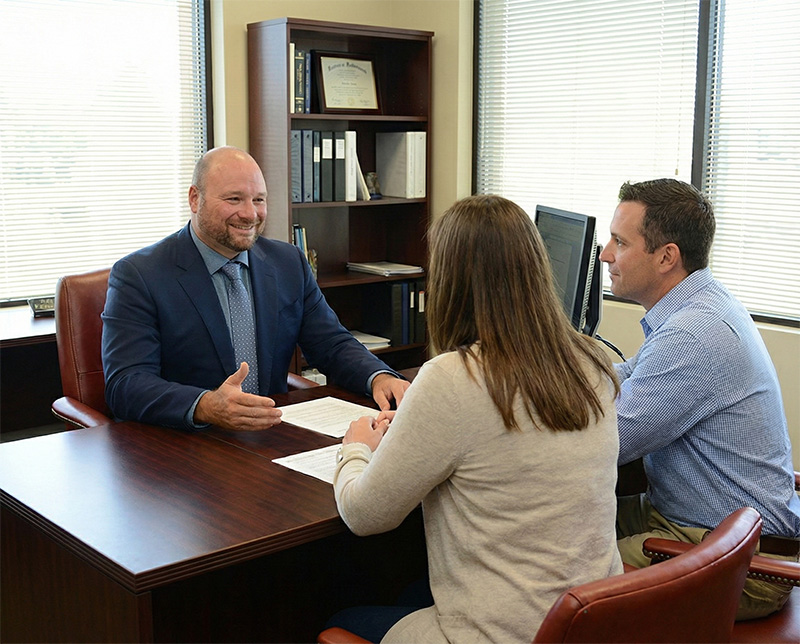
Get Your Free ConsultationExperienced Family Lawyers
Decades of combined experience in Pierce County family law
Trial-Tested
We've tried hundreds of family law cases to verdict
Local Knowledge
Daily practice in Pierce County Superior Court; we know the judges, commissioners, and procedures
Comprehensive Practice
Handle all family law matters under one roof (divorce + custody + CPS + child support)
Dual Family/Criminal Practice
Critical when cases overlap (DV charges during divorce, CPS + criminal investigation)
Direct Attorney Access
You work with experienced lawyers, not paralegals
Transparent Billing
Clear fee agreements, itemized invoices, payment plans available
What to Bring to Your Family Law Consultation
Existing court orders
Divorce decrees, parenting plans, support orders, protection orders
Marriage certificate
and children's birth certificates
Financial documents
Including pay stubs, tax returns, bank statements, credit card statements, retirement accounts
Communication logs
Like texts, emails showing co-parenting issues, abuse, or violations
Police reports
Especially if DV or criminal charges involved
CPS documents
Such as investigation letters, service plans, court orders, founded findings
Timeline of events
Documented dates of separation, incidents, violations
Even if you don't have all documents, come to the consultation—time is often critical.
Our Family Law Practice Areas
Divorce
Dissolution of Marriage in Washington State
Washington is a no-fault divorce state, meaning you don't need to prove wrongdoing—only that the marriage is 'irretrievably broken.' Our divorce attorneys handle everything from straightforward uncontested dissolutions to complex contested trials involving property division, spousal maintenance, and parenting plans.
Read MoreChild Custody
Parenting Plans & Residential Custody
Washington doesn't use the term 'custody'—the law focuses on parenting plans and residential schedules. But the stakes are the same: who makes decisions for your children, and where they live. We handle initial parenting plans, modifications, relocation cases, and third-party custody disputes.
Read MoreChild Support
Calculation, Modification & Enforcement
Child support in Washington is calculated using the Washington State Child Support Schedule (WSCSS). We handle establishment, modification when incomes change by 25%+, and enforcement through wage garnishment, license suspension, and contempt proceedings.
Read MoreCPS Dependency
Defending Parents in Child Protective Services Cases
When CPS investigates allegations of abuse or neglect, the stakes are your children. We defend parents' rights at every stage—from the initial 72-hour shelter care hearing through fact-finding, disposition, and permanency planning. If reunification fails, we fight termination of parental rights.
Read MoreAdoption
Building Families Through Legal Adoption
Adoption permanently terminates one person's parental rights and establishes another's. Our Tacoma adoption attorneys handle stepparent, relative, adult, and private adoptions—guiding families through petitions, consent requirements, background checks, and finalization hearings.
Read MoreCPS Administrative Hearings
Fighting Findings of Abuse or Neglect
Even without a dependency case, CPS may enter a founded finding of abuse or neglect that goes into a state database—affecting employment, licensing, and future custody. You have 90 days to request a hearing. We represent parents through the administrative hearing process to challenge these findings.
Read MoreOur Office
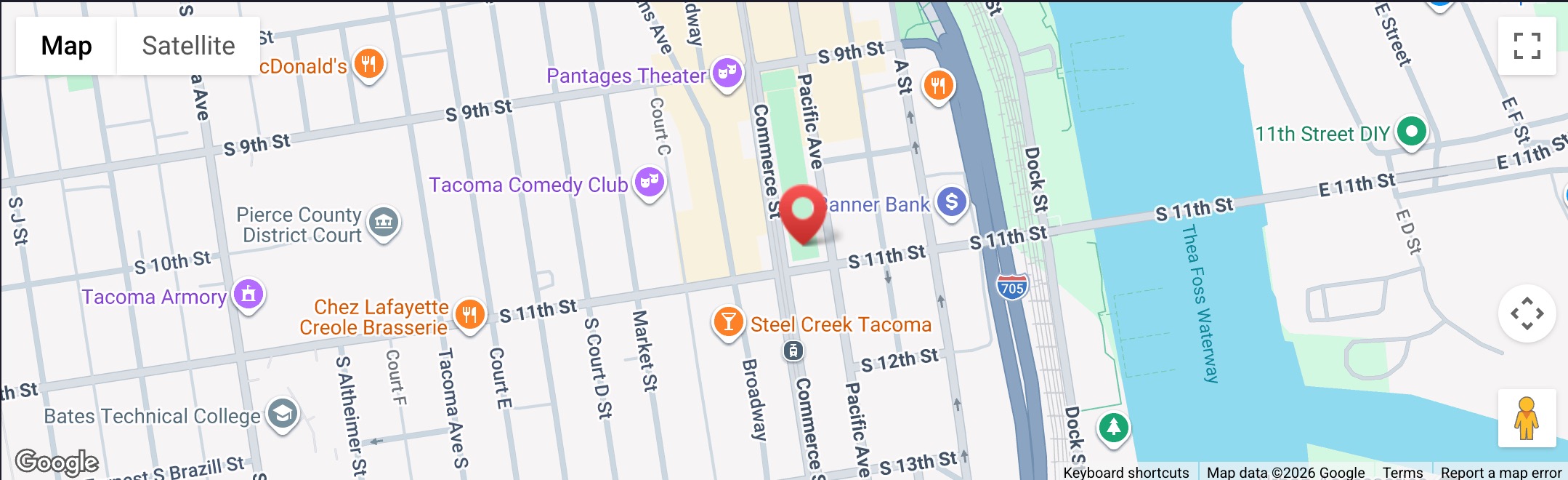
Melvin & Torrone, PLLP is located in downtown Tacoma, convenient to Pierce County Superior Court and near I-5. Our office is accessible, confidential, and designed to be a safe haven during the most difficult moments of your life.

Address
950 Pacific Ave
Suite 720
Tacoma, WA 98402

Hours
Monday – Friday
9:00 AM to 5:00 PM
Phone and off-hours consultations
available by appointment

Parking
Paid Street Parking
Pacific Plaza Garage
Park Plaza North
Republic Parking
Melvin & Torrone, PLLP
950 Pacific Ave, Suite 720, Tacoma, WA 98402
Serving Tacoma & Pierce County
We represent family law clients throughout the South Sound, including:
Cities
Neighborhoods
Frequently Asked Questions
Q: How long does a divorce take in Washington?
Minimum 90 days from service of petition (mandatory waiting period). Uncontested divorces with agreements finalize in 90–120 days. Contested cases with trials can take 12–24 months.
Q: Can I move out of state with my children?
Only if you're the residential parent AND you follow relocation requirements (60 days' notice, specific legal notice format, other parent's consent or court approval). Moving without permission can result in contempt or emergency custody change.
Q: What if my ex won't follow the parenting plan?
File a motion for contempt. Remedies include make-up time, attorney fees, fines, and—in egregious cases—modification of the parenting plan or even jail time.
Q: Can grandparents get custody or visitation?
Yes, but it's difficult. Third parties must prove parents are unfit or that they qualify as "de facto parents." Grandparent visitation requires showing denial of visitation harms the child.
Q: Will CPS take my kids if I call them?
Not necessarily. CPS investigates to assess safety. Many cases result in voluntary services (no court involvement). However, if CPS believes there's imminent danger, they can remove children. Never speak to CPS without a lawyer present.
Q: Can I avoid CPS dependency court?
Sometimes. If you voluntarily engage with services and CPS believes the child is safe, they may close the case without filing. Once a petition is filed, you need a dependency attorney immediately.
What to Bring to Your Consultation
Family Law Consultation
- Marriage certificate or domestic partnership documents
- Existing court orders (custody, support, protection orders)
- Financial documents (tax returns, pay stubs, bank statements)
- Property records (mortgage statements, vehicle titles, retirement accounts)
- Prenuptial or postnuptial agreements
- Communication records relevant to your case
- CPS correspondence or reports (if applicable)
- A timeline of key events
Criminal Defense Consultation
- Charging documents or citation
- Police reports
- Bail or release conditions
- Names of witnesses
- Photos, videos, or other evidence
- Previous criminal history (if any)
- Communication from prosecutors or investigators
- A written timeline of what happened
Even if you don't have documents, come anyway—time is critical.